

SHOULDER PAIN: What Causes It and When Should You See a Physical Therapist?
Shoulder pain can make simple everyday activities feel difficult. Reaching for something on a shelf, putting on a shirt, lifting your child, working at a desk, or getting comfortable in bed can all become challenging when your shoulder isn’t moving the way it should.
The good news is that shoulder pain doesn’t always mean you need surgery or that you simply have to live with it. Understanding what’s causing your pain and getting the right treatment can help you get back to moving comfortably.
In this article, we’ll explain some of the most common causes of shoulder pain, symptoms to watch for, and how physical therapy may help.
What Causes Shoulder Pain?
Your shoulder is one of the most mobile joints in your body. That mobility allows you to reach, lift, throw, push, and pull—but it also means the shoulder can be vulnerable to injuries, overuse, and other conditions.
Common causes of shoulder pain include:
-
Rotator Cuff Injuries: Damage or irritation affecting the muscles and tendons that support your shoulder.
-
Shoulder Impingement: Irritation that causes pain during certain arm movements.
-
Frozen Shoulder: Stiffness and pain that limit shoulder movement.
-
Arthritis: Joint changes that may cause pain and reduced mobility.
-
Overuse Injuries: Repetitive movements from work, sports, or daily activities.
Common Symptoms of Shoulder Pain
Depending on the cause, symptoms may include:
-
Pain when raising your arm
-
Shoulder stiffness or weakness
-
Limited range of motion
-
Pain while sleeping
-
Difficulty reaching overhead or behind your back
If your pain persists or affects your daily activities, consider seeking a professional evaluation.
How Can Physical Therapy Help?
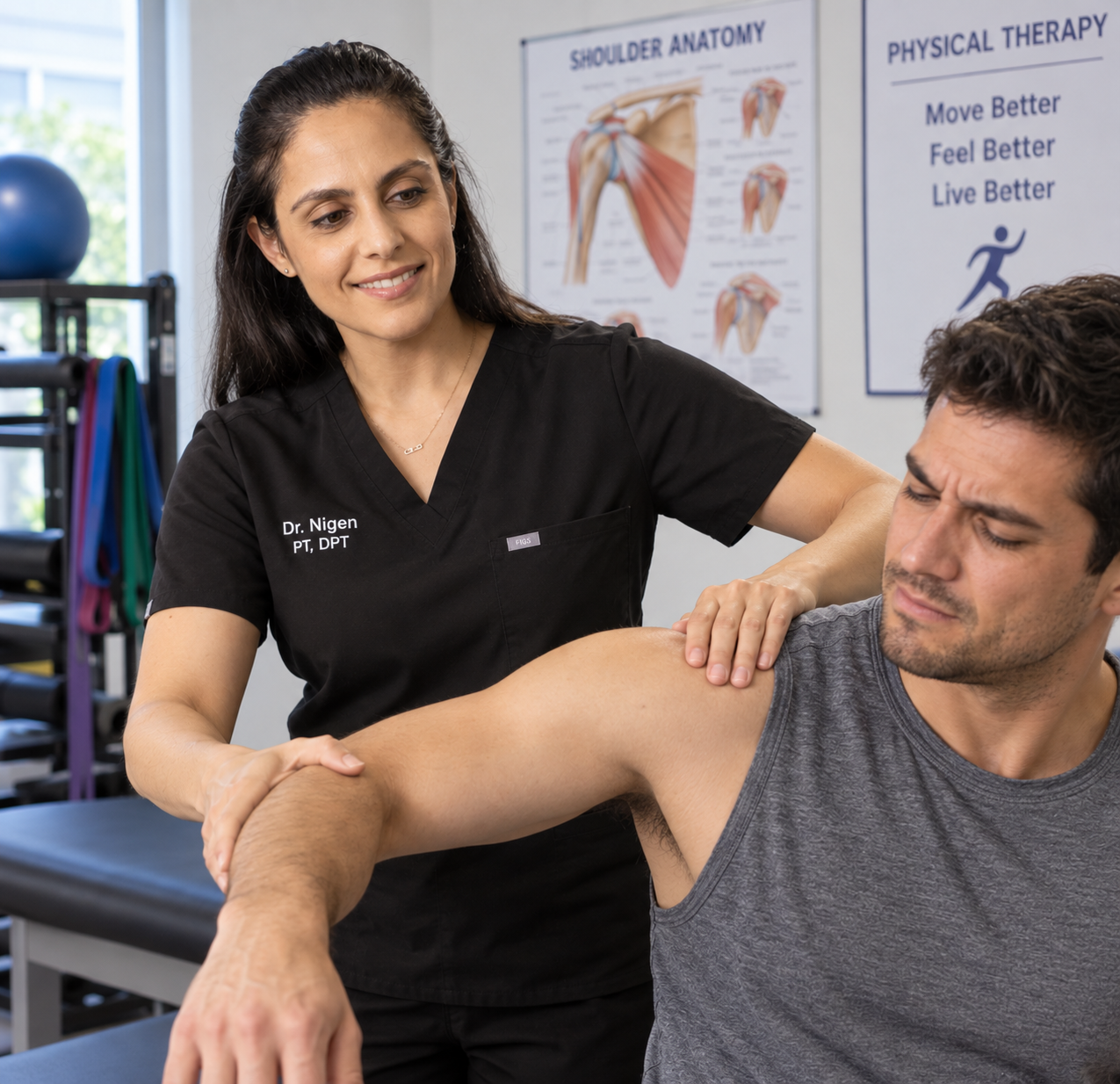
Physical therapy can help reduce discomfort, improve mobility, and restore shoulder function. Your personalized treatment plan may include:
-
Therapeutic exercises to improve strength
-
Mobility and flexibility training
-
Manual therapy when appropriate
-
Movement education and activity modification
-
Home exercises to support recovery
The right treatment depends on your symptoms, condition, and individual goals.
When Should You Seek Help?
Consider seeing a healthcare professional if shoulder pain persists, worsens, limits movement, or interferes with sleep. Seek prompt medical attention for severe pain following an injury, significant weakness, or visible deformity.
Get Help for Shoulder Pain at Marathon Physical Therapy
Shoulder pain doesn’t have to keep you from enjoying everyday activities. At Marathon Physical Therapy, our team can help evaluate your movement and develop a treatment plan tailored to your needs.
Ready to move more comfortably? Contact Marathon Physical Therapy to schedule an appointment.
Frequently Asked Questions
Can physical therapy help shoulder pain?
Yes. Physical therapy can help many shoulder conditions by improving strength, mobility, and function.
How long does shoulder pain take to improve?
Recovery varies depending on the cause, severity, and individual response to treatment.
Should I exercise with shoulder pain?
It depends on your condition. A physical therapist can help you determine which activities and exercises are appropriate.
Medical disclaimer: This article is for educational purposes only and does not replace professional medical advice, diagnosis, or treatment.